
Discover Naxos
Temples of Splendour
Apollo, Demeter and Dionysus: the great sanctuaries of ancient Naxos.
Naxos, being the biggest and most prosperous of the Cyclades, has always played a pivotal role in the Greek history. While many will dispute over whether its heyday was during the Bronze era, as the centre of the Cycladic civilization, or during the golden era of the Athenian democracy, it can’t be denied that the island enjoyed its political and cultural peak in the late 6th century BCE, under the leadership of tyrant Lygdamis, with the help of the Almighty Athens. During that time great temples were risen, but now only ruins of a few have remained. Apollo, Demeter and Dionysus’ temples are the most prominent ones, between other sites sacred to the rest of the Olympians, of now lesser importance.
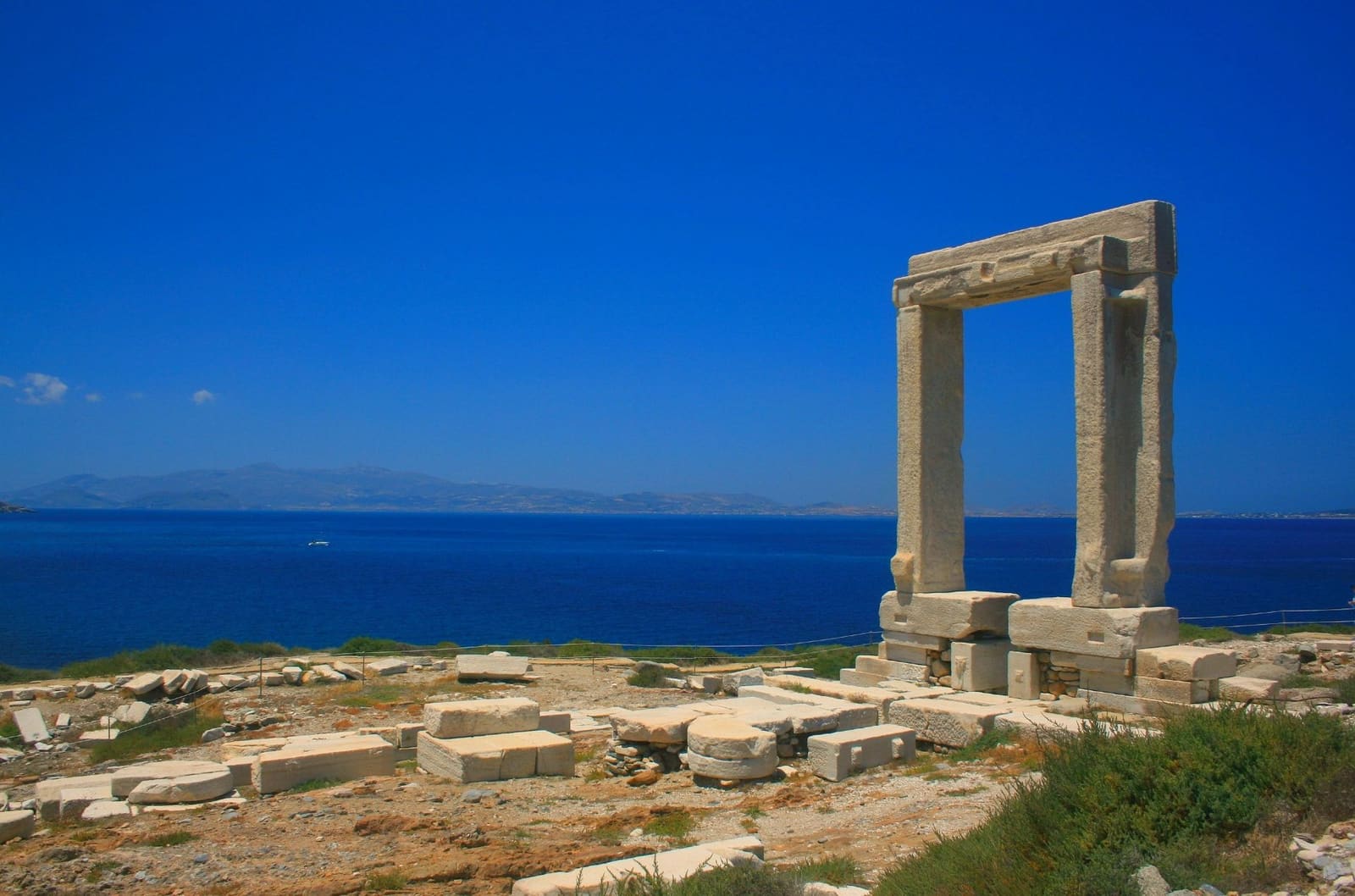
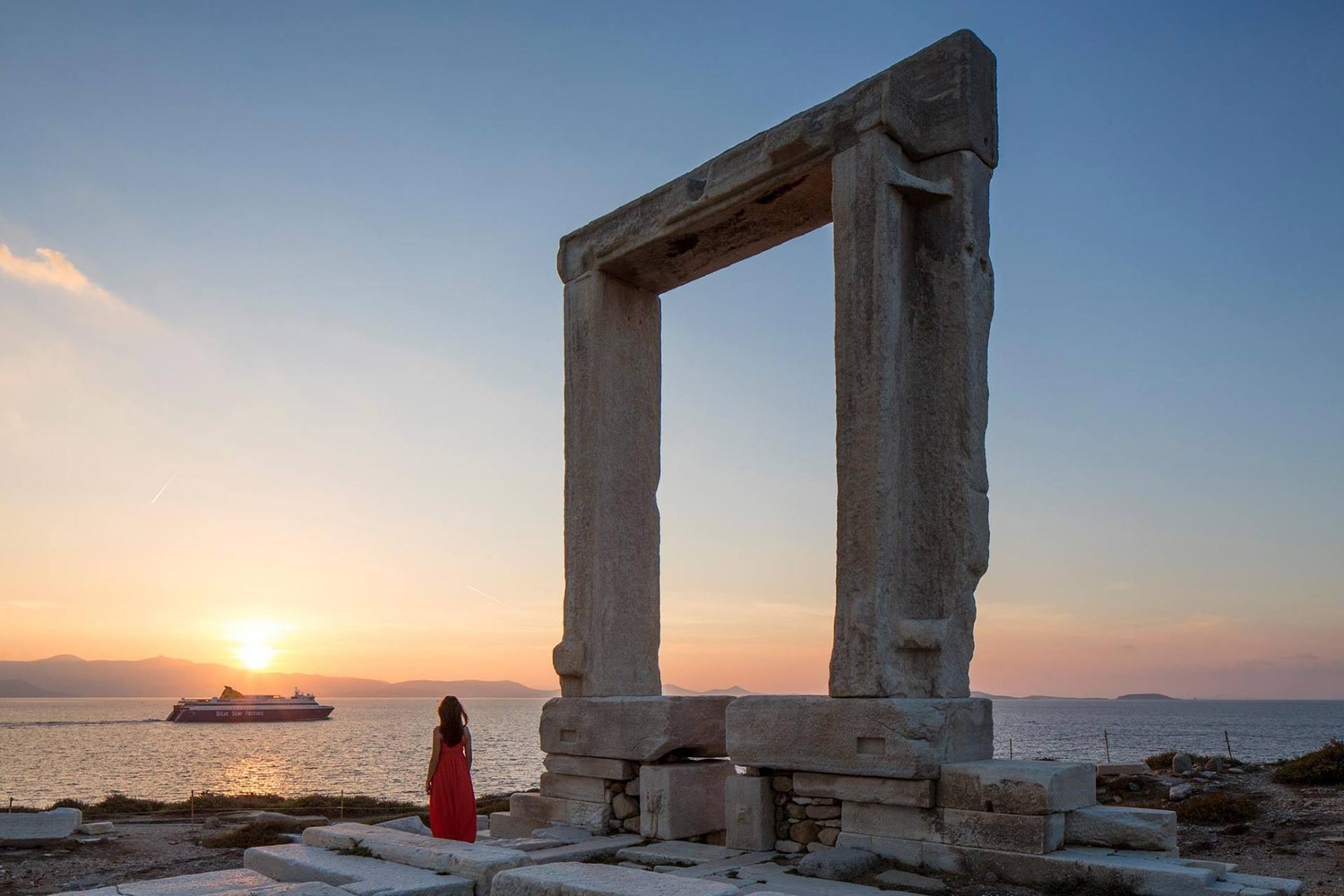
Apollo’s Temple is located on the isle of Palatia where a slim strip of land connects it to the main island, on the exact spot where, according to mythology, Ariadne was abandoned by Theseus and then found by Dionysus. Nothing remains of the sixth century BC Ionic temple nowadays, except its foundations and also the entrance of the prodromos to the inner cella, the Portara (measuring 6m high and 3.5m wide). Once, however, it would measure 59 by 28 metres, rivaling in size and splendour any other Greek temple.
The temple of Demeter is located close to the settlement of Sagri and its main focus of worship was the earthly characteristics of gods Demeter, Apollo and Kore. The temple was built around 530 BC in Ionic style, by local marble on the site of an earlier temple, probably dating back to the eighth century BC. It’s considered an early example of the then later widespread Greco-Roman architecture, as it’s one of the first to abolish the second floor of the cella, by increasing the inner columns to offer the roof support.
Dionysos was worshiped on the island from ancient times and its temple was located close to the nowadays village of Glinado. it’s another example of early Classical temple design. The ruins date back to 550 BC, however there are several indications that this structure was engineered on top of no less than three earlier temples, all dedicated to the wine God. The previous temples must have been destroyed by floods from the close stream of Biblinis. The last temple was demolished by Christians and a church dedicated to St. George was built in its place. Lastly a very rare and important feature of the location, that is required to see, is a sixth century BC well, one among the few living marble-lined examples and perhaps the oldest.
Gallery
Temples of Splendour
3 photos
More in Naxos
Explore more